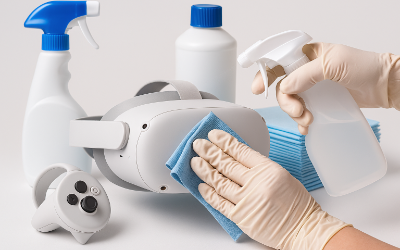
In a commercial VR arcade — especially a free-roaming arena where groups move actively through shared spaces — headsets undergo constant use. On busy days, dozens or even hundreds of players may rotate through the same equipment. Heat, movement, and exertion cause headsets to become sweaty, damp, and generally in need of quick turnaround. To maintain customer satisfaction and hygiene standards, operators must prepare each headset properly before handing it to the next player. Below are four effective methods used in commercial VR arenas to maintain cleanliness and ensure a comfortable, hygienic experience for every guest.
Method 1: Disposable Hygiene Masks
Disposable hygiene masks create a simple barrier between the player's face and the VR headset. These lightweight cotton liners are worn like a thin mask before putting on the headset. They reduce direct skin-to-device contact and can be discarded after each session, making them ideal for situations where large groups cycle through quickly.Advantages
- Very affordable
- Suitable for high-volume group sessions
- Adds an extra hygiene layer between users
Disadvantages
- Does not stop sweat from entering the foam or facial interface
- Does not eliminate bacteria — only adds a physical barrier
- Requires an extra step for each player before putting on the headset
Method 2: Disinfectant Wipes
Disinfectant wipes are one of the most common cleaning tools in VR arcades. They allow staff to quickly wipe down the surfaces of Pico and Oculus headsets between sessions. For PU-leather or synthetic face pads, wipes provide good coverage and remove sweat and surface residue. For fabric face pads, it's safer to use a soft, slightly damp lint-free cloth to avoid damaging the material.⚠️ Important: Care must be taken around the lenses: abrasive or alcohol-based wipes can permanently damage them. A separate microfiber cloth or glasses cleaner should always be used for lens cleaning.
Advantages
- Fast and simple for staff to use
- Provides a quick turnaround between players
Disadvantages
- May not remove all bacteria or contaminants
- Risk of damaging lenses if alcohol wipes or harsh chemicals are used
- Effectiveness depends heavily on wipe quality and thorough cleaning technique
Method 3: Alcohol-Free Disinfectant Spray
Alcohol-free disinfectant sprays designed for electronics offer a deeper cleaning option without risking damage to sensitive components such as lenses or face pads. Water-based antibacterial sprays are particularly useful because they can be applied to the entire headset — including the optical surface — without leaving residue or causing deterioration.These sprays typically eliminate a high percentage of bacteria and viruses and are made from gentle ingredients, making them safe for repeated daily use in a commercial VR arena setting.
Advantages
- Safe to apply on lenses
- Neutral, non-damaging formula
- Kills a high percentage of bacteria and viruses
- Ideal for repeated use throughout the day
✅ Recommended: Alcohol-free sprays provide excellent sanitation without the risk of equipment damage, making them ideal for daily commercial use.
Method 4: UV-C Light Disinfection Systems
UV-C light disinfection cabinets represent the most thorough cleaning method available for VR arcades. By exposing headsets to controlled UV-C light, these cabinets neutralize bacteria, viruses, and other pathogens quickly and without moisture or chemicals. Many commercial UV-C cabinets can clean multiple headsets simultaneously, making them highly efficient for high-turnover free-roam arenas.Some systems also provide secure storage and integrated charging, allowing headsets to be disinfected and powered at the same time — useful for arenas with large inventories of Pico or Oculus devices.
Advantages
- Highly effective at neutralizing bacteria
- Very fast cleaning cycles
- Can store and disinfect multiple headsets at once
- Often equipped with charging ports
- Useful as a secure overnight storage system
Disadvantages
- Higher initial investment
- Requires access to a power source
- Larger physical footprint compared to wipes or sprays
💡 Pro Tip: UV-C cabinets are particularly valuable for overnight deep cleaning and can significantly reduce staff cleaning time during busy operating hours.
Conclusion
In a busy free-roam VR arcade environment, hygiene and quick turnaround are essential. Pico and Oculus headsets can be safely cleaned using multiple methods depending on the level of traffic, available time, and desired sanitation standard. Disposable masks add a basic protective barrier, wipes provide a quick refresh, sprays deliver chemical-free disinfecting, and UV-C cabinets offer the highest level of cleanliness and efficiency.Each method has strengths and limitations, and many commercial VR arenas choose a combination to ensure that every player enters the experience with a fresh, clean, and comfortable headset.
📋 Best Practice: Combining multiple methods — such as disposable masks for quick sessions, alcohol-free spray for between-session cleaning, and UV-C for overnight deep sanitization — provides the most comprehensive hygiene solution.